Yes, we design packaging, and here is what that covers
Aahfil designs packaging for Kuwait brands as a core part of our branding work, not as a favour squeezed in at the end of a logo job. If your product goes into a box, a bag, a jar, a pouch, a cup or a gift sleeve, we design the surface the customer holds and we prepare the file your printer actually runs. That covers the graphic design, the layout on the printer's dieline, the bilingual text hierarchy, the finishes and the checks that stop a print run going wrong.
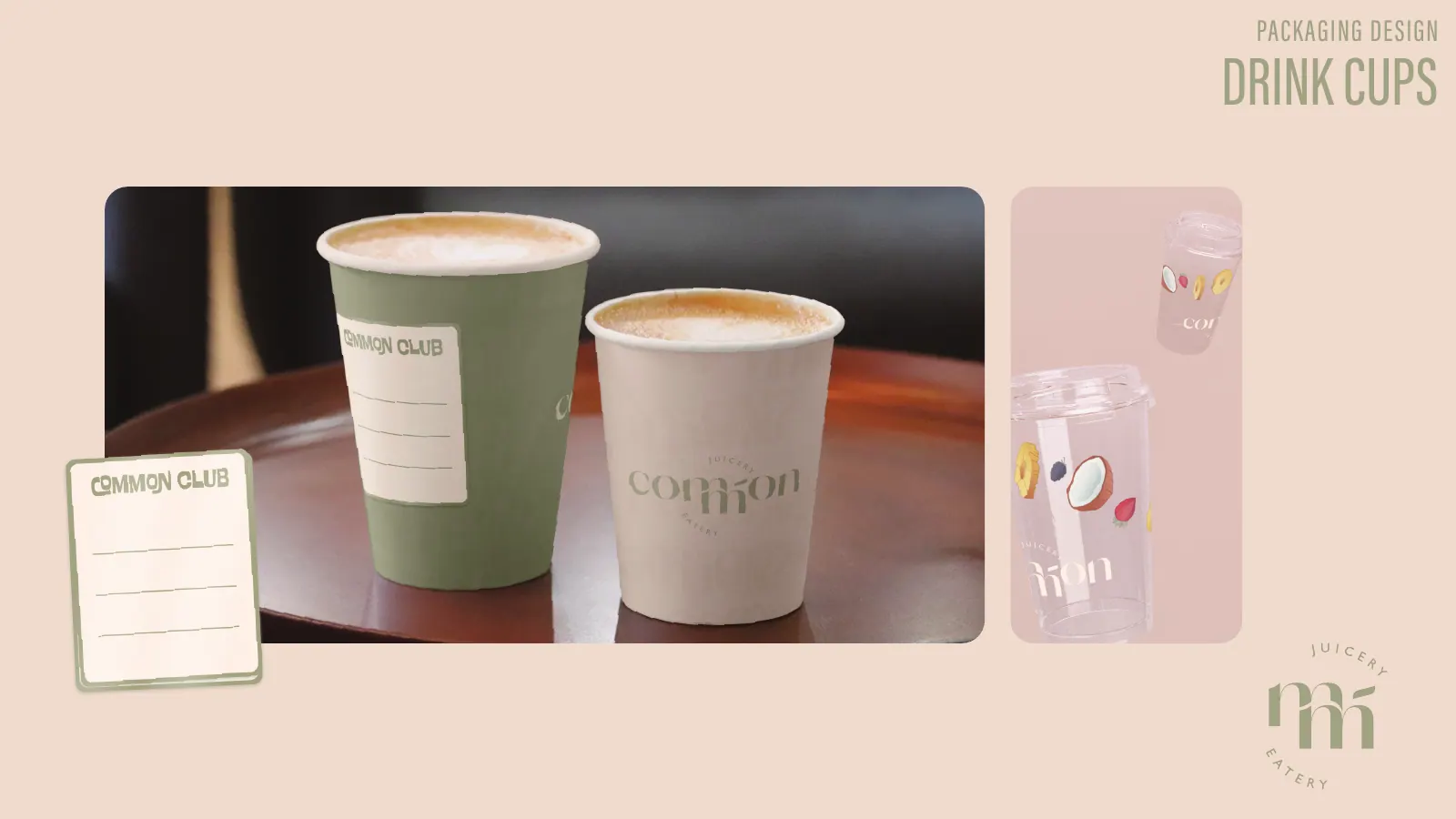
The range is wider than most owners expect. We design folding cartons and rigid gift boxes, product labels and stickers, kraft and paper shopping bags, stand-up pouches, coffee and juice cups, sleeves and belly bands, tissue and wax paper patterns, shipping boxes for online orders, and the small insert card that goes inside. For food brands we also design trays, tubs and the label system that sits on the lids.
What we do not do is manufacture. We do not own a press or sell stock boxes, which is exactly why we can point you to whichever Kuwait printer or overseas supplier suits your quantity and budget. You stay free to quote the print job with more than one supplier, because the file we hand over is built to their specification and is not locked to anyone.
Packaging rarely lives alone, so most of our packaging work sits inside a wider branding project: the logo, colours, type and patterns are decided first, then carried onto the box. If you already have an identity you are happy with, we start from your existing guidelines and design only the packaging, keeping everything you have already paid for.
Who can design packaging in Kuwait: four honest options
When owners search for who designs packaging in Kuwait, they usually land on four kinds of answer, and each one is right for somebody. Knowing which one you need saves money and, more importantly, saves you from reprinting a batch of boxes nobody likes.
A branding agency such as Aahfil designs the packaging as part of the brand. You get boxes and labels that match the logo, the menu, the Instagram grid and the ads, plus editable files you own and can send to any printer. This is the strongest option when the packaging has to carry the brand across several products, several sizes or several seasons.
A freelance designer can be very good value for a single label or one box, especially one who has packaging in their portfolio and knows how to set up a dieline. Ask to see printed pieces, not only digital mockups, and ask who checks the Arabic before the file goes to print.
A printer's in-house designer knows that shop's machines, papers and finishes well, and is usually quick. The catch is that the design tends to be adapted from layouts they have produced for other customers, the files often stay with the print shop, and moving to another printer later can mean starting again.
A packaging supplier that sells stock boxes, cups or pouches will often add your logo for free with the order. For a first small batch that is a sensible deal. The limit is that the design is shaped around their catalogue rather than your identity. We compare all four in more depth in our guide on who designs packaging in Kuwait, with the questions to ask each one before you pay.
Why packaging is the surface your customers see most
In Kuwait a lot of first impressions now happen at the front door. A Talabat or Deliveroo rider hands over a bag, an online order arrives in a shipping box, and the customer either films the opening for Instagram, Snapchat or TikTok or throws the box away without a second look. Packaging is often the first physical thing anyone touches from your brand, long before they visit a shop.
Physical retail works the same way. On a shelf in a co-op, a pharmacy or a concept store at the Avenues, your box sits beside a dozen competitors and gets a glance of a second or two. The front panel has to say what the product is, who made it and why it is different, in the language the shopper reads first. For many Kuwait shoppers that is Arabic and for others it is English, so the front has to work for both without becoming crowded.
Gifting raises the stakes again. Ramadan, Eid and the national holidays in February are when Kuwait buys boxes of dates, chocolates, perfume and sweets to carry into someone else's home. A gift box is judged by the person receiving it, who may never have seen your shop or your website. In that moment the box is the whole brand.
That is why we treat packaging as the brand's most-seen surface rather than a job for the end. When we draw a mark in our logo design work, we test it on the box from the start, so it survives foil, emboss and a small round sticker on a lid as well as it survives a website header.
Dielines, finishes and what a Kuwait printer needs from you
A dieline is the flat technical drawing of your box or bag: every cut, fold, glue flap and bleed area. It comes from the printer or the supplier, because it depends on their cutting tools and their material. The most common packaging mistake we see is artwork designed on a guessed shape, which then has to be stretched or redrawn when the real dieline arrives. We always ask for the printer's dieline before the final layout begins.
Print shops in Shuwaikh and around Kuwait City, and the overseas factories many brands order from, each want files slightly differently. Usually they ask for a print-ready PDF with bleed, fonts embedded or outlined, colours defined in CMYK or as named spot colours, and finishes such as foil, spot UV or emboss supplied on separate layers. We set up each file the way that particular printer asks, and we speak to their pre-press person directly when something is unclear.
Finishes are where packaging gets expensive and where it quietly goes wrong. Gold foil on a fine Arabic letter can fill in and lose the dots. Soft-touch lamination on a dark box shows every fingerprint. Uncoated paper dulls a colour that looked bright on screen. We specify finishes with those trade-offs in mind, and we tell you plainly which ones are worth paying for on your product and which ones only look good in a mockup.
Kuwait's climate is a brief of its own. Chocolate and some cosmetics travel from an air-conditioned shop into a car parked in the summer sun, chilled food sweats as soon as it leaves the fridge, and labels on cold bottles peel when the paper and adhesive are wrong. We ask where the product is stored and carried, and we flag where the material should be confirmed with your supplier before the run.
Before any run we recommend a printed proof or a physical sample, and we go through it with you line by line. The full list of what to check, from the barcode to the glue flap, is in our packaging design checklist for Kuwait brands.
Bilingual labels: Arabic that still reads at label size
Most packaging in Kuwait carries Arabic and English, and the label is where bilingual design gets hardest. A typeface that looks elegant in a logo can turn into a row of dots at the size of an ingredients panel. Arabic letters carry dots, small counters and deep descenders that close up when printed small, and many Arabic fonts are drawn visibly larger or smaller than their English partner at the same point size.
We set the Arabic and English so both read at the actual printed size, then we check them on a printed proof rather than on a zoomed-in screen. Where a font pairing does not hold up, we change it instead of hoping. Our guide to Arabic fonts for bilingual brands explains how we choose and size the two scripts together.
Direction matters as well. Arabic reads right to left and English left to right, so a front panel has to decide which language leads and how the eye travels between them. Some brands give each language its own side of the box; others stack the two with a clear hierarchy. We choose based on who buys the product and where it sells, not on habit or on what the last brand did.
One rule we hold to firmly: the mandatory text on a label belongs to you and the authority, not to us. Labelling requirements for food and other products are set by Kuwait's food and commerce authorities, and you confirm the exact wording with the authority or your supplier. We design the label around the text you supply and make it legible and well organised. We never present a label as compliant, and we will remind you to have the final content checked before you approve the print.
Packaging that belongs to a brand system
Good packaging is rarely a single box. It is a system that can stretch to a second flavour, a larger size, a gift edition and a shipping box without being redesigned each time. We build that system from colour codes, patterns, an illustration style and a fixed grid for the text, so your next product can be added to the range quickly and still look like it belongs.
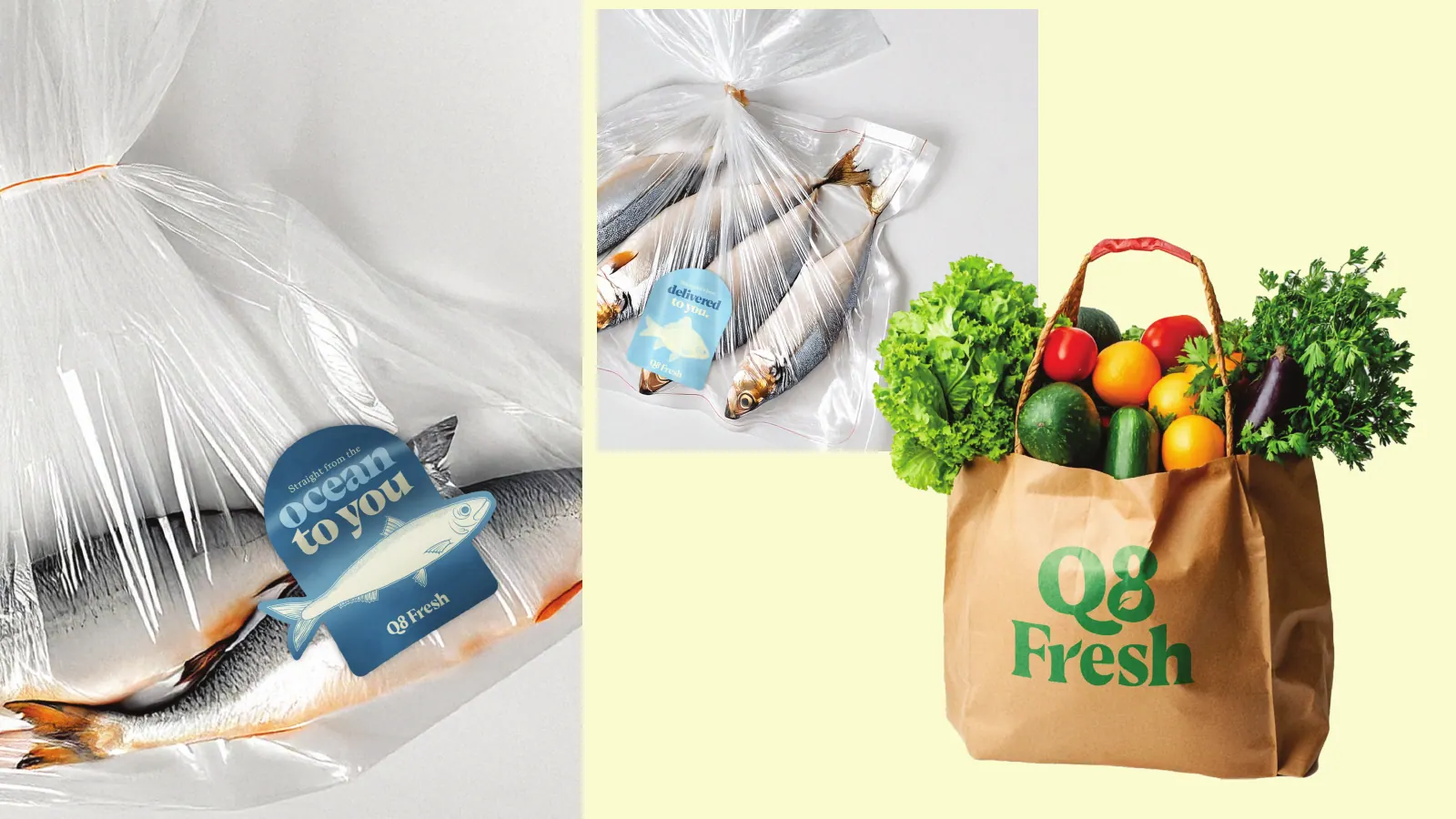
For Q8 Fresh, a grocer selling fish, meat and produce, we drew one friendly serif logo with fish, leaf and meat variants, so the same brand could label three very different counters. The identity was carried across bags, labels, trays and a product catalogue, each counter recognisable on its own and all of them clearly one shop.
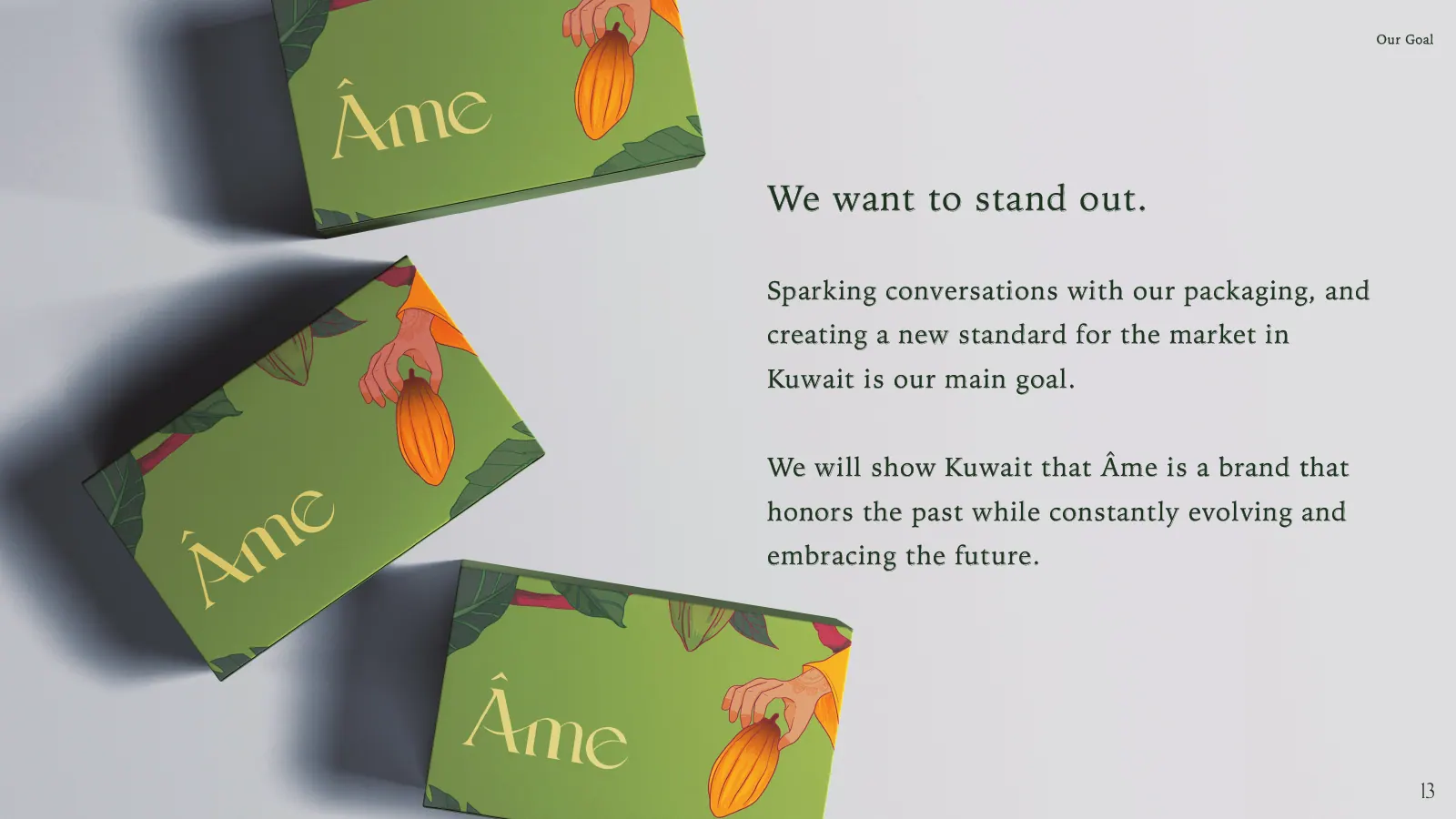
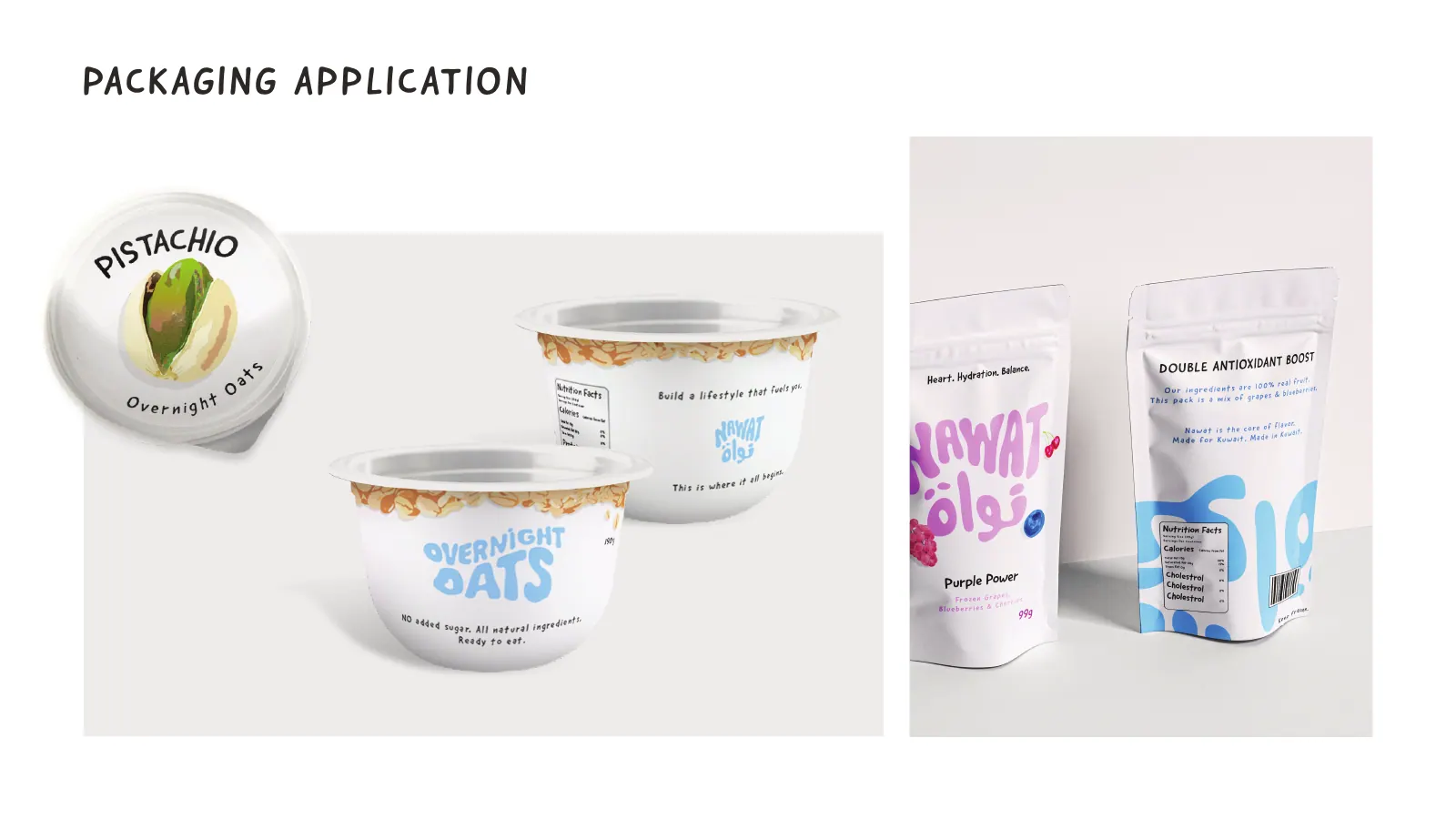
For Nawat, a healthy grab-and-go brand, the system was bubble lettering drawn in Arabic and English together, a custom display font, watercolour ingredients and a set of flavour colours carried onto cups and pouches. For Âme, a chocolate brand, we kept the serif wordmark deliberately simple so that hand-drawn illustrations of cacao and Middle Eastern kitchens could carry the chocolate boxes and the shopping bag.
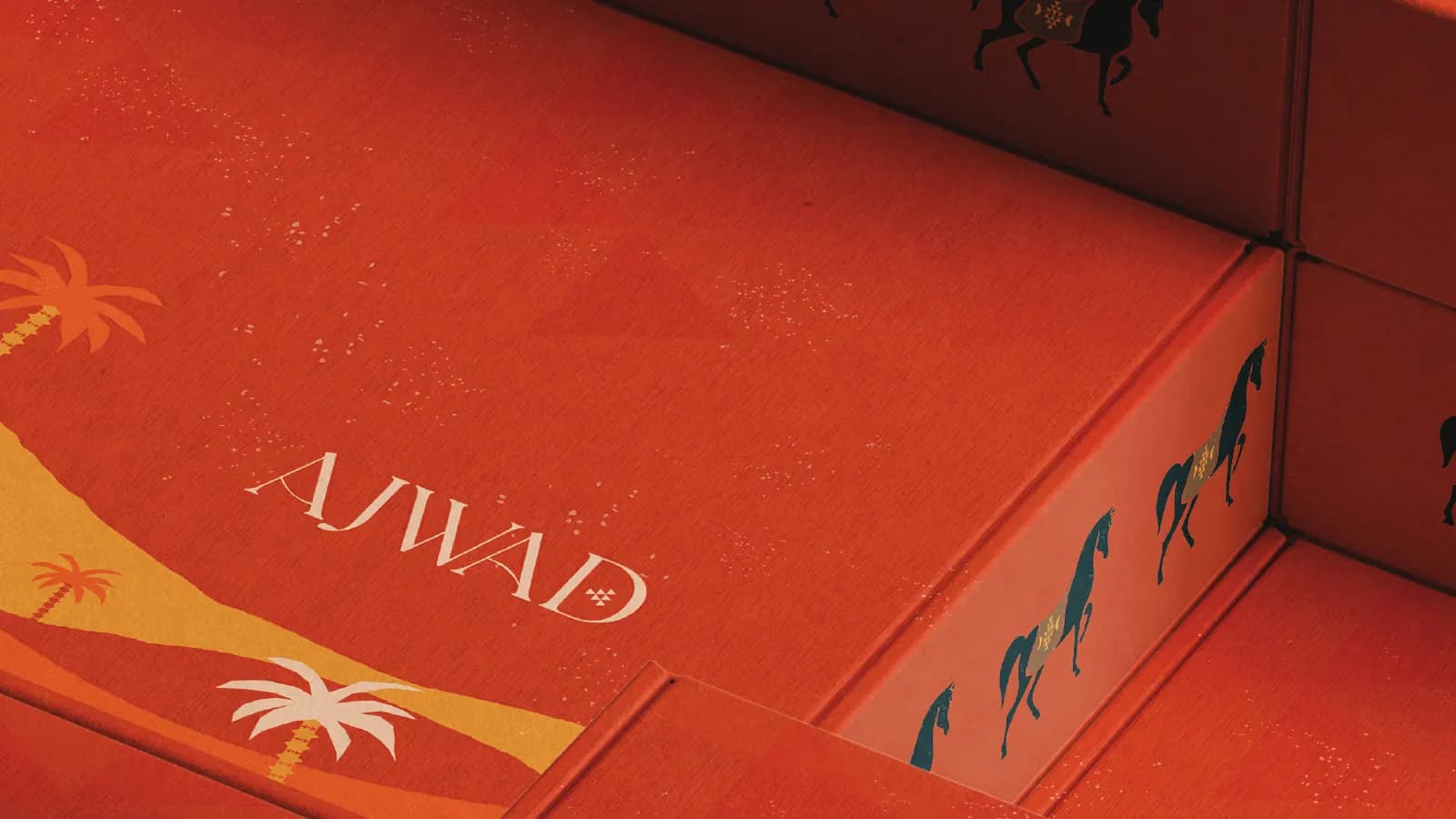
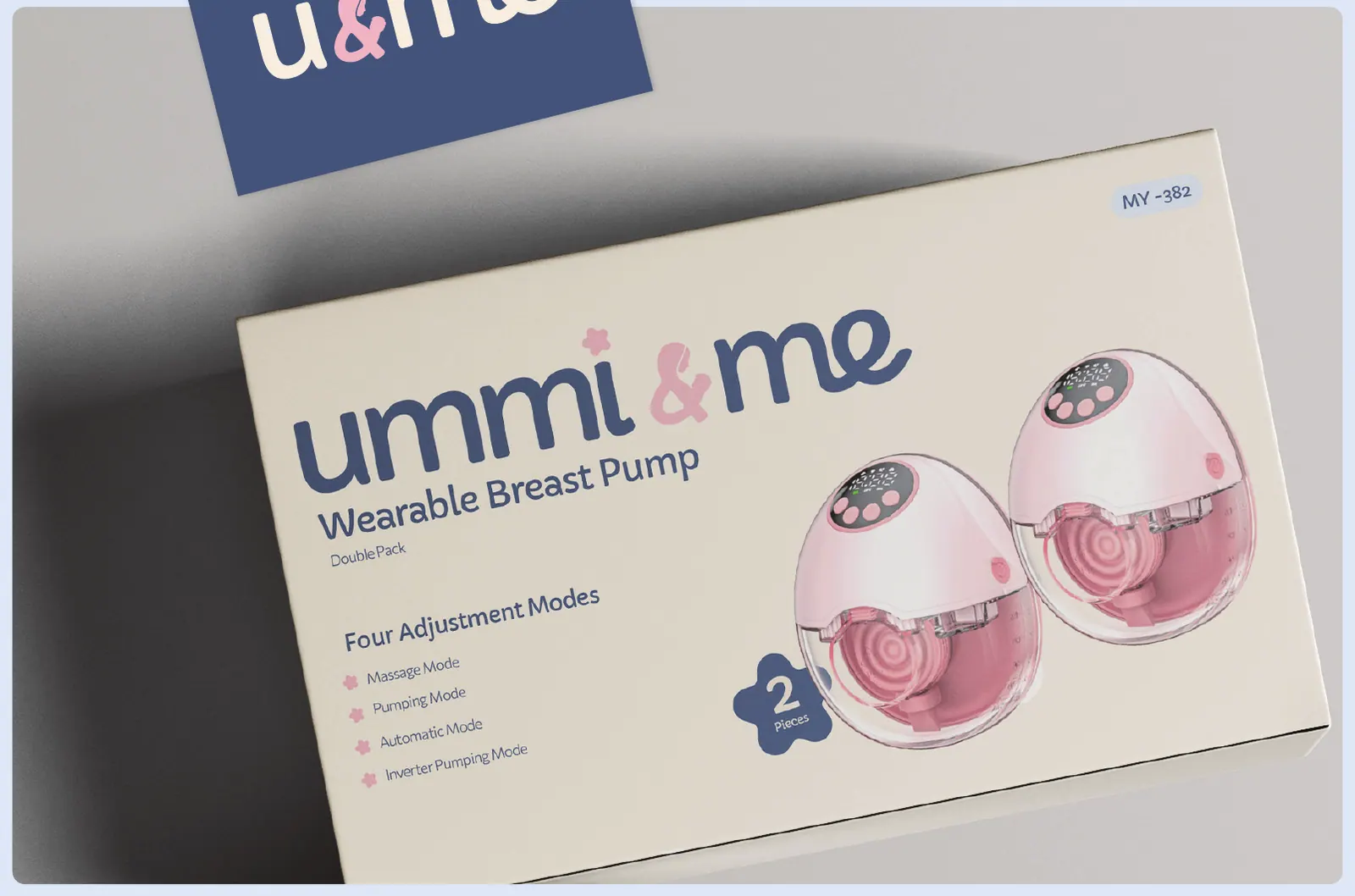
For AJWAD, a heritage gift brand, the packaging language came from two patterns drawn from Sadu weaving and the desert, built for gift boxes alongside an Arabian-horse icon. For Ummi & Me, a mother and baby brand, an ampersand drawn as a mother holding her baby ran across the product box, the shipping box and the insert card. Each of these started with the identity and finished at the box, which is the order we recommend to every client.
Seasonal editions, online stores and what comes after the box
Kuwait's retail year has its own rhythm. Ramadan and Eid bring gift boxes, sleeves and limited colourways, February brings national-holiday editions, and the summer months bring cold drinks and lighter products. We design a core packaging system that a seasonal sleeve, sticker or ribbon can sit on top of, so you are not reprinting the whole range every season and your regular customers still recognise you in the gift aisle.
If you sell online, the box and the store should feel like one brand. We prepare clean packaging renders for your product pages, and the same team can build the Shopify store that sells the product, with KNET and Apple Pay at checkout and the Arabic version laid out properly rather than mirrored as an afterthought.
Once the boxes exist, they need to be seen. Unboxing reels, flat-lays and launch posts for a new flavour are part of the work, and our social media management team can take the packaging straight into content for Instagram, Snapchat and TikTok, so the launch does not wait on yet another supplier to understand the brand.
If you are still deciding whether you need packaging design at all, or whether a sticker on a stock box will carry you for now, message us on WhatsApp or through the contact page. We will tell you honestly which one fits the stage you are at, and if it is the sticker, we will say so.